PROJECT ALPHABET
Mind the Gap: Generational Fluency at Work
As you walk through any workplace, you will see it– different generations working side-by-side. On the surface, it looks simple enough. Everyone goes about their day, quietly and steadily. But the truth is, when people work together, they don’t just co-exist. They either collaborate or collide.
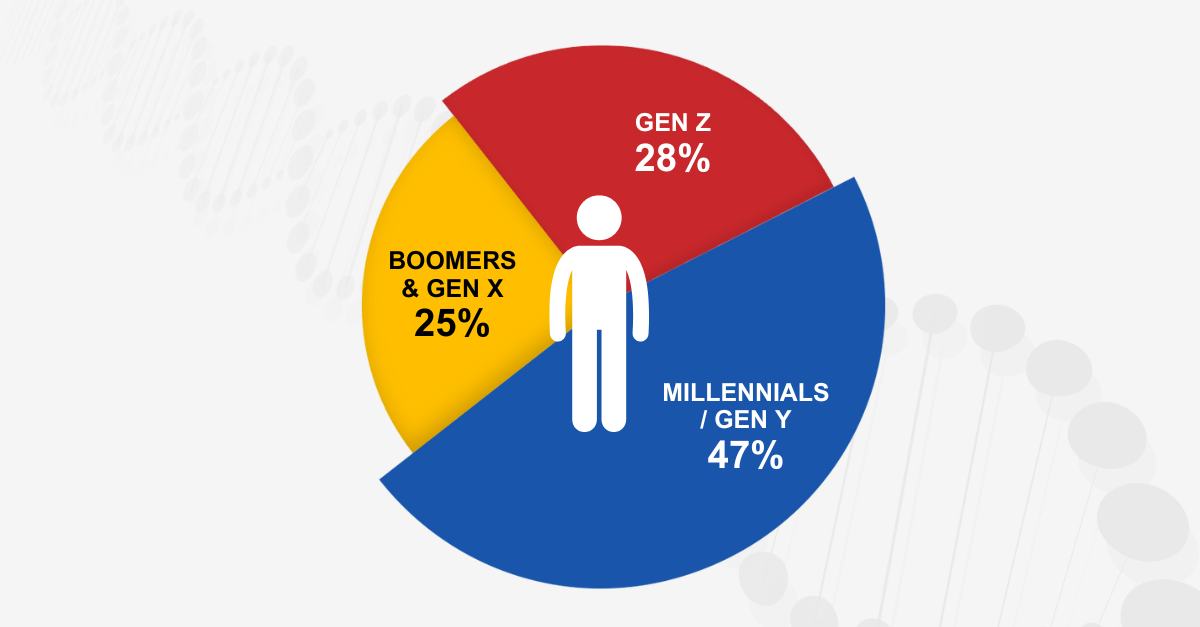
Why Generational Dynamics Matter
Companies must pay close attention to these dynamics because it can make or break an organization. The company will grow if its people thrive. And they will thrive under circumstances where there is respect and trust, where they have a voice, where they find purpose and can meaningfully contribute. All generations aspire for these same values. But there will be differences in perspectives, preferences, either in the way they interpret a value or in the way that they manifest their beliefs at work.
When cross-generational teams work in harmony, they turn diversity into advantage.
They draw strength from each other’s experiences, share ideas openly, give feedback respectfully, and hold each other accountable to shared goals. This is demonstrated by openness in sharing and accepting ideas, in expressing their thoughts or providing feedback, in setting and living up to work expectations. This is where collaboration sparks innovation, growth and creative problem solving.
Without openness and understanding, tensions will occur. New ideas may sound threatening to those who hold on to tradition and legacy, feedback may feel like criticism and judgment, and upholding boundaries for worklife balance will sound like an excuse from fulfilling commitments and being devoid of a sense of urgency.
As the generation mix in the workforce becomes more diverse, these tensions are becoming more prevalent. Organizations now find themselves needing a new skill to bridge the implications of a multi-generational workforce: Generational Fluency.
What Is Generational Fluency?
Generational Fluency is the ability to appreciate the uniqueness of each generation, not necessarily to have to bend to each other’s whims, but to see how understanding a different point of view and preference might give rise to a win-win solution, a compromise and shared progress.
It is the art of navigating generational differences with empathy, agility, and strategic intent. Importantly, it goes beyond knowing the stereotypes (e.g., Boomers value loyalty, Gen Z wants flexibility) and instead focuses on:
- Appreciating and understanding the experiences that shaped each generation’s perspective
- Recognizing behavioral patterns in communication, motivation, and decision-making
- Adapting leadership and organizational practices to meet diverse generational needs
- Developing inclusive environments where all generations feel seen, heard, and valued
It is not about satisfying preferences—it is about developing a climate where multigenerational teams can better collaborate, co-create, cooperate, so that everyone thrives and the organization grows.
A Strategic Skill, Not a Buzzword
Therefore, Generational Fluency should not be perceived as another fashionable buzzword. It is a strategic enabler—one that organizations must urgently cultivate to unlock the engagement, performance, and innovation across their workforce. And in the Philippines, where family, hierarchy, and community deeply influence workplace dynamics, Generational Fluency is not optional — it is essential.
At Project Alphabet, we have been listening to voices across generations — from Gen Z’s calls for empathy, to Millennials’ push for growth, to Gen X’s need for balance, to Boomers’ desire for stability. While the study highlights shared values, without Generational Fluency, those shared goals get lost in translation.
Three signs you may have a Generational Fluency gap
- Feedback loops stall. Messages get taken as personal, not professional.
- Meetings end polite, but unresolved. No one is sure who should decide.
- Good people leave quietly, not for pay, but because they don’t feel understood.
Three small shifts to start building it
- Explain the why, not just the what. People anchor better when they understand context.
- Highlight the value of what is existing, before proposing change. It honors legacy, while making space for progress.
- Adjust recognition. Some want public thanks; others value private acknowledgment or growth opportunities.
Generational Fluency is not about characterizing people into generational labels — it is about seeing each individual, beyond age, to understand what drives, inspires, and challenges them. This is the missing skill in Filipino workplaces that must take priority. And organizations that make the shift converts generational diversity into a real competitive edge.
In the coming weeks, we will share more findings from Project Alphabet — insights and stories on how leaders can start practicing Generational Fluency in everyday moments. Visit our website:
Written by: Jocel Labrador, Senior Strategist, Subject Matter Expert, Program Director for Organization Transformation, Acumen
Jocel is a Senior Strategist, Subject Matter Expert, and the Program Director for Organization Transformation for Acumen. She brings over 20 years of HR experience in various disciplines, with primary focus on HR strategy, consulting, coaching and related strategic initiatives, and has significant experience working with C-level executives and leading HR functions in multinational and local firms.
Insights

Shifts in Filipino values and priorities: Being well, finding balance, keeping the faith

When good intentions get misread: Why generational fluency matters
There are four ways you can
access Project Alphabet:
Recommended and Best Value: Full Subscription (Insight + Action)
FULL REPORT: Exclusive Access to
- 2-Hour Comprehensive Report presentation
- Soft Copy of Full Report
- Soft Copy of Complete Data Tables
IMPACT WORKSHOP: One (1) Acumen-Led Insight to Action Workshop for Commercial or People Teams.
Cost: PhP 1.2 Million (ex-VAT)
Free Copy of the Topline Report Only
An executive summary featuring 3 key themes and some headline data to be sent via email.
What you’ll miss from the Full Report:
- Detailed generational profiling (context, values, workplace attitudes and values)
- Detailed discussion on the 5 Mandates for a Future-ready Organization and Best Practices from benchmark companies.
Free Presentation of the Topline Report
Experience an expert-led walk through of the Topline Report containing 3 key themes and some headline data. We will reach out to you for either a webinar schedule or an in-house presentation schedule arrangement.
What you’ll miss from the Full Report:
- Detailed generational profiling (context, values, workplace attitudes and values)
- Detailed discussion on the 5 Mandates for a Future-ready Organization and Best Practices from benchmark companies.
Customized Report
Work directly with our team to create a tailored package focused on your specific requirements (by-generation; insights on money, health, food; organizational challenges on succession, culture, leadership, development and work structure).
Cost: Customized pricing to be discussed based on scope. Please specify your requirement in the form.
Project Alphabet
We will get back to you as soon as possible.
Please try again later.


Email: info@acumen.com.ph
Contact No.: +632 8849 3475
Acumen Strategic Consulting, Inc.
Acumen Strategic Consulting, Inc.
IN PARTNERSHIP WITH